When considering an investment in sustainable technology, a common question arises: What’s the return? In other words, what do you actually get back from the money and effort you put in? Traditionally, this idea of return on investment (ROI) focuses on financial savings, such as reducing energy bills over time. But with kinetic floors, the return is much broader, blending measurable electricity generation with audience engagement, sustainability education, and powerful brand storytelling. In this article, we’ll explore how much energy kinetic floors can produce, and why their value lies not just in the kilowatts, but in the experiences and impact they help create.
Our kinetic floors are designed to convert movement into clean electricity. The exact output depends on how people interact with the floor:
- Walking: approx. 2 watts per step
- Dancing or jumping: up to 30 watts per tile

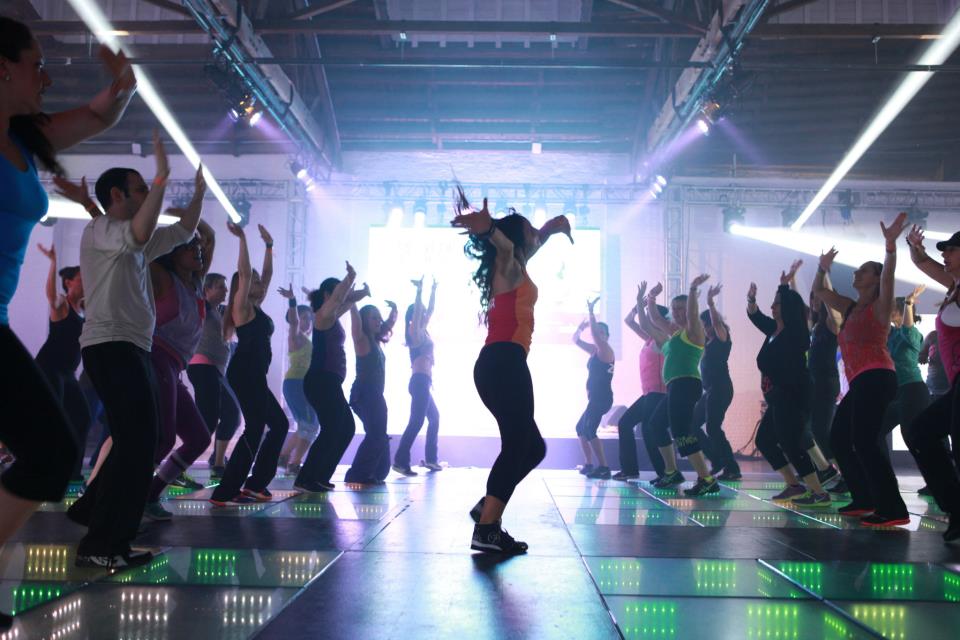
Individually, humans aren’t major energy producers, but in a crowd, the energy adds up quickly. At Cisco Live! Amsterdam, we installed a kinetic floor that captured thousands of steps, powering a dynamic light installation in real time. The electricity produced was measurable, the experience unforgettable, and the message clear: innovation and sustainability go hand in hand.
Why install a Kinetic Floor?
Kinetic floors aren’t designed to replace your energy grid. Instead, they add unique value in ways that static solar panels or traditional systems can’t. These interactive floors:
- Engage audiences physically and emotionally
- Visualize clean energy in action with live data
- Support key UN Sustainable Development Goals (SDGs): especially SDG 7 (Affordable and Clean Energy), SDG 11 (Sustainable Cities and Communities), and SDG 13 (Climate Action)
- Transform spectators into sustainability participants
Take LEGOLAND® New York, for example. Families learned about clean energy while playing, one stomp at a time. Or consider Würth Italy, where a kinetic dance floor in the staff canteen turned every lunch break into an energy-generating, awareness-building moment.

A different kind of return
Let’s be practical: While powering a music concert with kinetic energy is technically feasible, say, by covering a stadium floor with kinetic tiles and having 20,000 people jump continuously for two hours, it’s simply not economically viable at this stage. And let’s face it, no crowd jumps nonstop for that long during a concert. Realistically, the energy generated from dancing fans won’t sustain an entire sound system. However, the true worth of kinetic flooring extends far beyond just electricity generation:
- Awareness: Visitors experience firsthand how much effort it takes to produce energy, creating a deeper understanding of energy use and conservation.
- Communication: Kinetic energy turns sustainability into an engaging, real-time experience, making abstract climate goals visible and memorable through movement and interaction.
- Innovation Leadership: Companies using kinetic floors position themselves at the forefront of smart, interactive sustainability.
At Clockenflap 2024, Hang Seng Bank invited festival-goers to dance on a kinetic dance floor, powering parts of the event and turning sustainability into a live brand activation. Similarly, one of the most compelling examples is Coldplay’s world tour, where audience movement helped power elements of the stage production.
The real numbers behind kinetic energy output
To understand what’s technically possible, it’s helpful to look at some real figures. A single person walking can generate roughly 2 watts per step, while jumping or dancing may produce up to 35 watts per movement. When scaled to a large crowd, say 20,000 active participants, it’s theoretically possible to produce up to 800 kilowatt-hours of electricity during a high-energy event. That’s enough to power lighting installations, charge on-site batteries, or support low-consumption electronics. However, real-world movement is inconsistent, and the actual yield depends on how engaged and active the crowd is throughout the event.
The energy generated is typically stored in efficient lithium-ion battery systems, which can retain over 90% of the electricity for immediate or short-term use. These systems are ideal for concerts or campaigns that require energy surges or want to visualize real-time usage. While this contribution may only represent a small portion of a venue’s total power needs, the emotional and educational value it adds is significant. Visitors see, feel, and influence the energy system, turning awareness into action.

Measuring what matters
Energy Floors technology turns every step into data that matters. By tracking real-time metrics like electricity generated, CO₂ offset, and participant engagement, it offers more than just energy—it delivers transparency, measurable impact, and powerful storytelling. These kinetic floors aren’t designed to slash your energy bills, but to energize your brand, spark interaction, and make sustainability tangible. They transform movement into meaning, putting your values in motion and your message at the heart of the experience.
Curious what kind of impact your venue, event, or campaign could make? Try our Energy Impact Calculator and see what’s possible.